Description
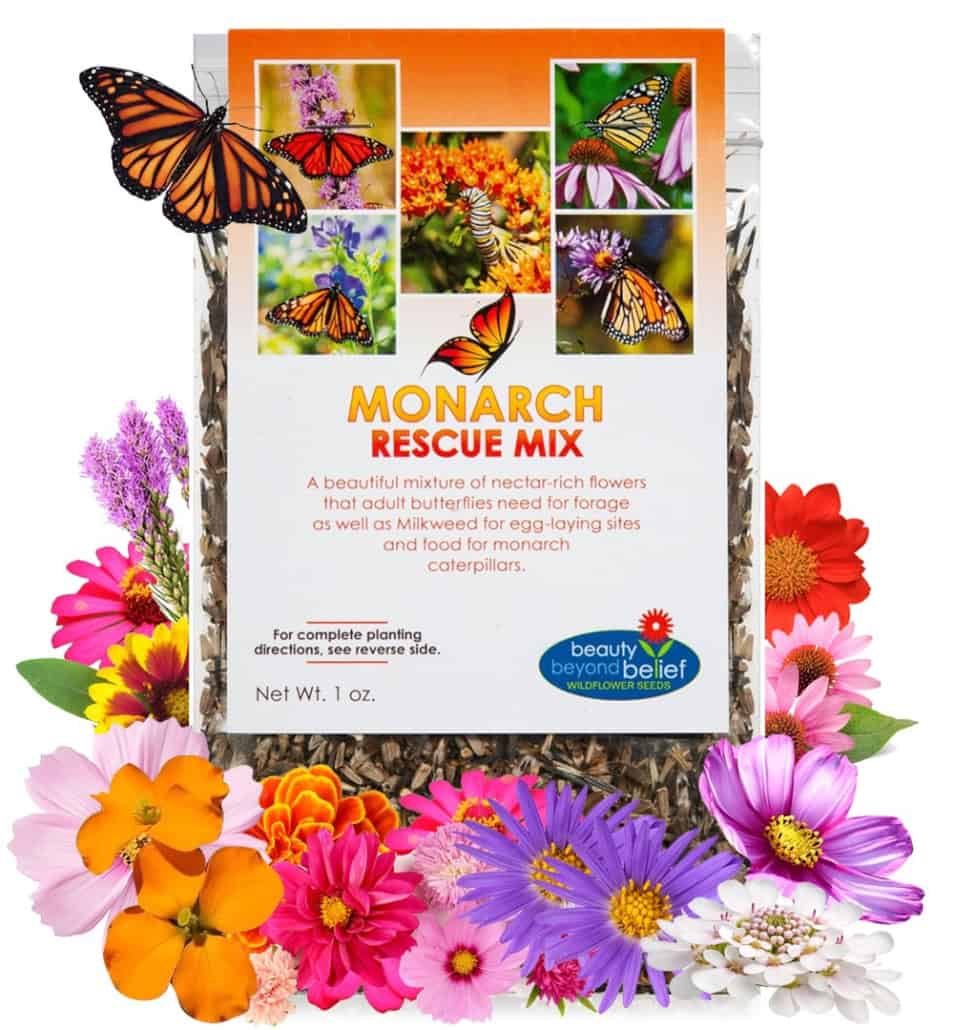
Monarch Rescue Wildflower Seed Mix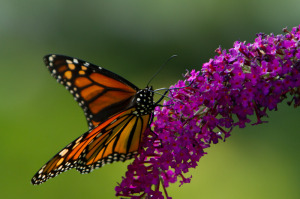
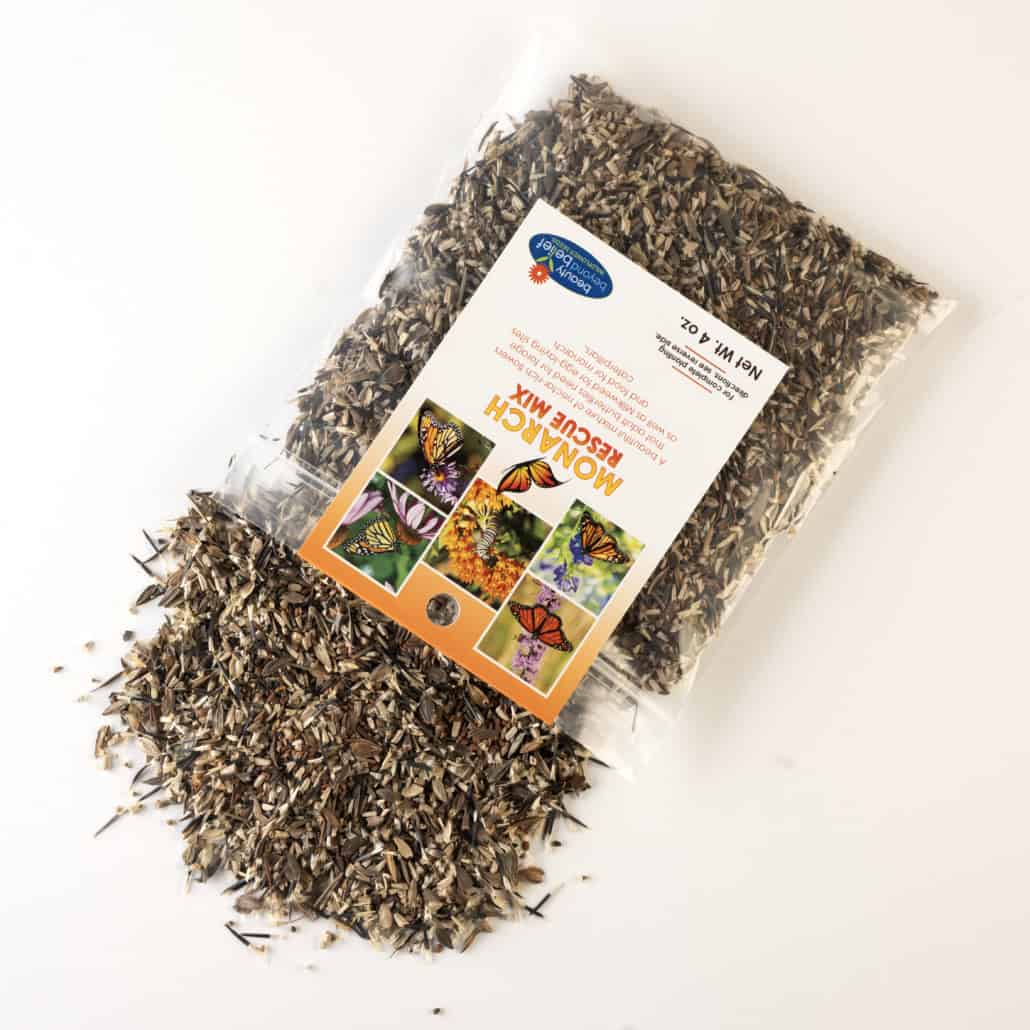
Our Monarch Rescue Mix features a beautiful combination of nectar-rich flowers that adult butterflies need for forage as well as Milkweed for egg-laying sites and food for monarch caterpillars. Let’s create this new hidden monarch habitat in our yards. Whether you have two square feet like me or space for a 15′ x 15′ plot, you can help save monarchs from extinction. One yard, one packet of seeds, one plant at a time, we can provide food and a place to raise baby monarchs.
Seeds per pound: 192,000, Approximately 12,000 seeds per 1oz package!
Planting Zones: 2-10
Recommended Monarch Rescue Mix Seeding Rates:
(from lush to moderate coverage)
1 oz. 100 -150 sq ft.
4 oz. 375 – 500 sq ft.
8 oz. 750 – 1000 sq ft.
1 lb. 1,500 – 2,000 sq ft.
5 lb. 7,500 – 10,000 sq ft.
10 lb 15,000 – 25,000 sq ft.
25 lb. 1-2 acres (1 acre = 43,560 sq ft.)
Planting milkweed and a wide variety of high-quality nectar-bearing flower species will provide a foraging site for adult butterflies and help support monarch populations and their incredible migration! Adult monarchs follow nectar corridors, a series of habitat patches of plants that flower at appropriate times during the spring and fall migrations. These flower sites provide stopping off points for the butterflies to feed and stock up during their long migrations. Plant Monarch Rescue Mix which is designed to provide these nectar corridors.
To learn about the White House’s unprecedented alliance for bee and Monarch butterfly recovery, click here.

Pollinator Bookmarks
Best Planting Season:
Wildflowers can be planted in early spring or in late fall for dormant seeding. For spring planting, sow one month before the last hard freeze. For late fall planting, sow when freezing nighttime temperatures are consistent so the seed stays dormant until spring.
Easy Planting Instructions:
- Prepare the soil: Remove weeds and grasses, then loosen only the top layer of soil for better seed-to-soil contact.
- Spread the seeds evenly: Divide the seeds into two or more batches and scatter each batch over the entire area to avoid uneven coverage.
- Cover lightly: Rake gently to snuggle the seed into the top layer of soil. Cover only to about 1/8 inch, then press the soil down with your hands or a wide board. Use only a thin layer of mulch to hold moisture.
- Water regularly: Gently soak the area and maintain consistent moisture for 4 to 6 weeks. If irrigation is not practical, aim to plant when natural moisture is most reliable.
- Maintenance: Early seedlings can look like weeds. Wait until plants are recognizable or blooms appear before pulling weeds. Expect a strong annual display the first season, with perennials building strength into years two and three.
Growth Requirements:
Moisture must be present for germination.
Wildflower seeds often need light to germinate, so do not bury the seeds deeply.
For improved distribution in larger areas, you can mix seed with clean sand and use a spreader.
Mix Contents
Siberian Wallflower (Cheiranthus allionii)
Candytuft (Iberis umbellata)
‘Dalia Flowered’ Zinnia Mix (Zinnia elegans ‘Dahlia Flowered Mix’)
Purple Coneflower (Echinacea purpurea)
Indian Blanket (Gaillardia pulchella)
Gayfeather (Liatris spicata)
‘Sensation’ Cosmos (Cosmos bipinnatus ‘Sensation Mix’)
Sulphur Cosmos (Cosmos sulphureus ‘Bright Lights Mix’)
Mexican Sunflower (Tithonia rotundifolia)
Larkspur (Delphinium consolida)
Smooth Aster (Symphyotrichum leave)
French Marigold (Tagetes patula ‘Dainty Marietta’)
Butterfly Milkweed (Asclepias tuberosa)
Hoary Vervain (Verbena stricta)





Reviews
There are no reviews yet.