Description
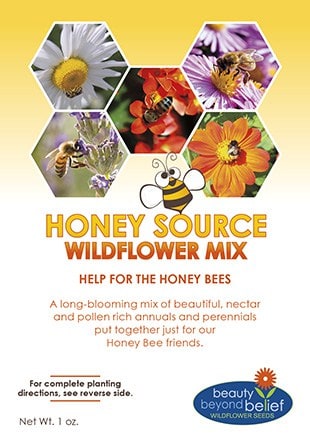
Honey Source Flower Seed Mix
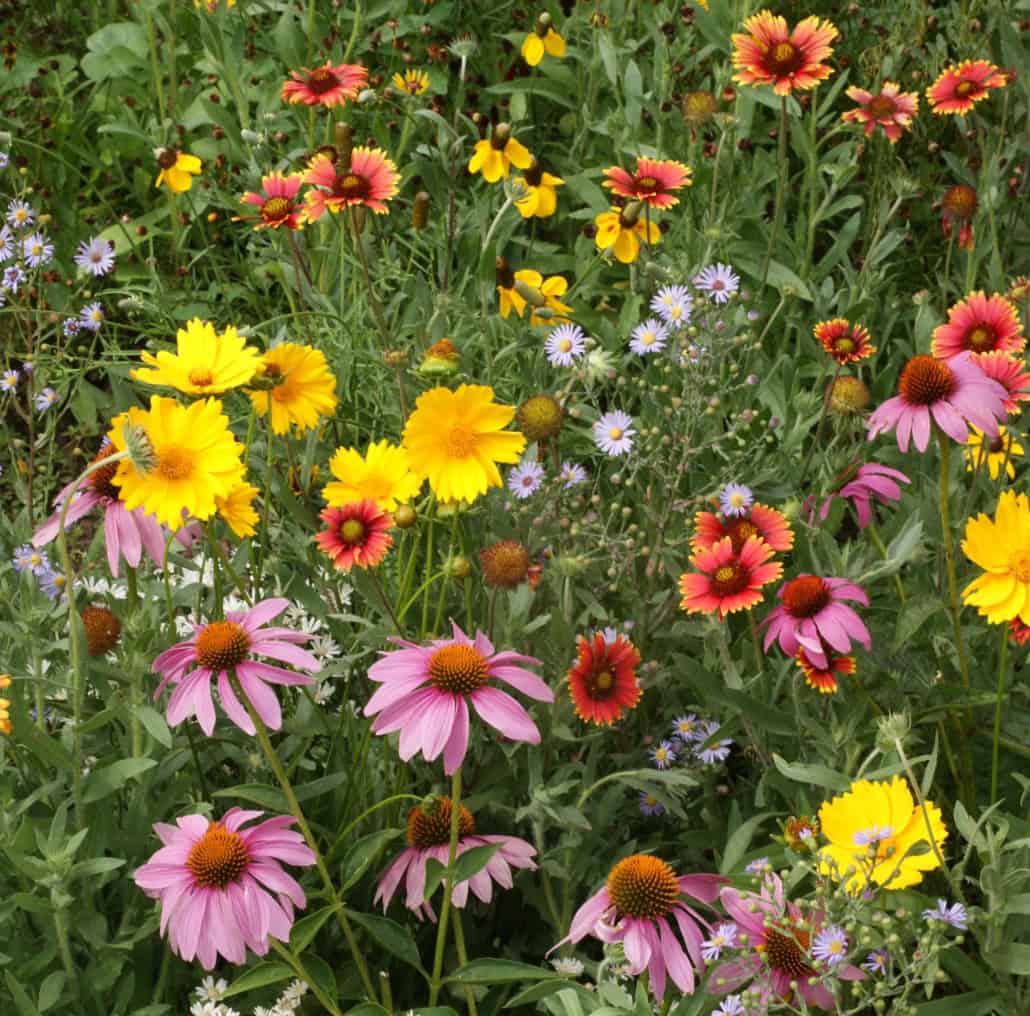
Support honey bees and other beneficial pollinators with our Honey Source Mix, a long-blooming blend of nectar- and pollen-rich annual and perennial wildflowers. Designed to provide a reliable food source throughout the growing season, this mix helps sustain honey bees when natural forage may be limited.
Honey bees play a vital role in agriculture and food production, but habitat loss and reduced floral diversity have made it increasingly difficult for them to find the nutrition they need. By planting pollinator-friendly wildflowers, you can help create valuable habitat while adding beautiful color to your landscape.
This mix is an easy way to support pollinators in containers, gardens, meadows, and larger landscapes. The diverse selection of flowers blooms from spring through fall, providing season-long nourishment for honey bees, native bees, butterflies, and other pollinating insects. Many of the species included are also drought-tolerant once established, making them a great choice for water-wise gardening.
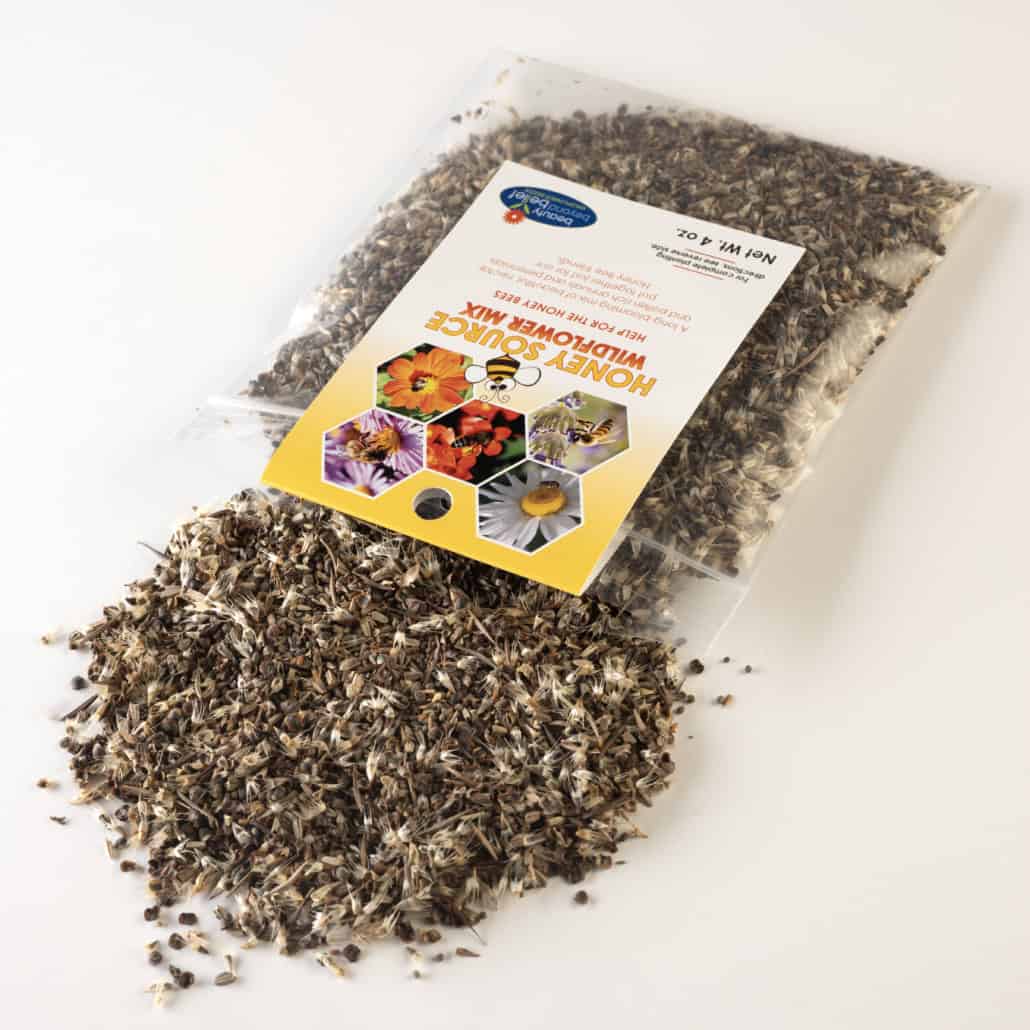
Seeds per pound: 442,000 Approx. 27,600 seeds per 1oz package.
Recommended Seeding Rates
(from lush to moderate coverage)
1 oz. 100 -150 sq ft.
4 oz. 375 – 500 sq ft.
8 oz. 750 – 1000 sq ft.
1 lb. 1,500 – 2,000 sq ft.
5 lb. 7,500 – 10,000 sq ft.
10 lb. 15,000 – 25,000 sq ft.
25 lb. 1-2 acres (1 acre = 43,560 sq ft.)
Wildflower Seed Planting Tips
For fun and education, get these “I love pollinators” stickers and bookmakers!
Best Planting Season:
Wildflowers can be planted in early spring or in late fall for dormant seeding. For spring planting, sow one month before the last hard freeze. For late fall planting, sow when freezing nighttime temperatures are consistent so the seed stays dormant until spring.
Easy Planting Instructions:
- Prepare the soil: Remove weeds and grasses, then loosen only the top layer of soil for better seed-to-soil contact.
- Spread the seeds evenly: Divide the seeds into two or more batches and scatter each batch over the entire area to avoid uneven coverage.
- Cover lightly: Rake gently to snuggle the seed into the top layer of soil. Cover only to about 1/8 inch, then press the soil down with your hands or a wide board. Use only a thin layer of mulch to hold moisture.
- Water regularly: Gently soak the area and maintain consistent moisture for 4 to 6 weeks. If irrigation is not practical, aim to plant when natural moisture is most reliable.
- Maintenance: Early seedlings can look like weeds. Wait until plants are recognizable or blooms appear before pulling weeds. Expect a strong annual display the first season, with perennials building strength into years two and three.
Growth Requirements:
Moisture must be present for germination.
Wildflower seeds often need light to germinate, so do not bury the seeds deeply.
For improved distribution in larger areas, you can mix seed with clean sand and use a spreader.
Mix Contents
Slender Mountain Mint: (Pycnanthemum tenuifolium) Delicate white blooms and a minty-smelling plant, highly desirable to pollinators.
New England Aster: (Symphyotrichum novae-angliae) Provides late-summer and fall bee forage.
Single Mixed China Aster: (Callistephus chinensis) Energetic and long-lasting blooms.
Giant Purple Hyssop: (Agastache rugosa) Great source of pollen and nectar for butterflies, honey bees, and hummingbirds.
Siberian Wallflower: (Cheiranthus allionii) Warm-toned accent in mixed plantings.
Sweet Mignonette: (Reseda odorata) Valuable nectar resource for pollinators.
Lance Leaved Coreopsis: (Coreopsis lanceolata) Clear yellow color with a clean, meadow look.
Orange California Poppy: (Eschscholzia californica) Orange pop of color and a light, natural drift effect.
Sweet Genovese Basil: (Ocimum basilicum) Attracts honey bees, bumblebees, and other native bees.
Purple Coneflower: (Echinacea purpurea) Perennial structure and bold midsummer color.
Firewheel: (Gaillardia aristata) Fast color and warm tones in the first season.
Mixed Shirley Poppy: (Papaver rhoeas) Showy seasonal color with classic wildflower style.
Chinese Forget-Me-Not: (Cynoglossum amabile) Early spring bloomer adds a sparkle of blue.
Dwarf Mixed Sulphur Cosmos: (Cosmos sulphureus) Airy stems and soft, cottage-style color.
Purple Prairie Clover: (Dalea purpurea) Native legume with vibrant purple blooms.
Cape Forget-Me-Not: (Anchusa capensis) Early blooms and delicate flowers.
Scarlet Cinquefoil: (Potentilla thurberi) Easy nectar source for bees.
Lacy Phacelia: (Phacelia tanacetifolia) An eye-catching and unique look.
Mexican Hat: (Ratibida columnifera) Strong form that holds its own in open sites.
Mix contents may vary. Please call for current varieties.


Reviews
There are no reviews yet.